It’s Okay To Not Be Okay
Kylie Kelce Said the Quiet Truth Out Loud—and Women Everywhere Felt It.
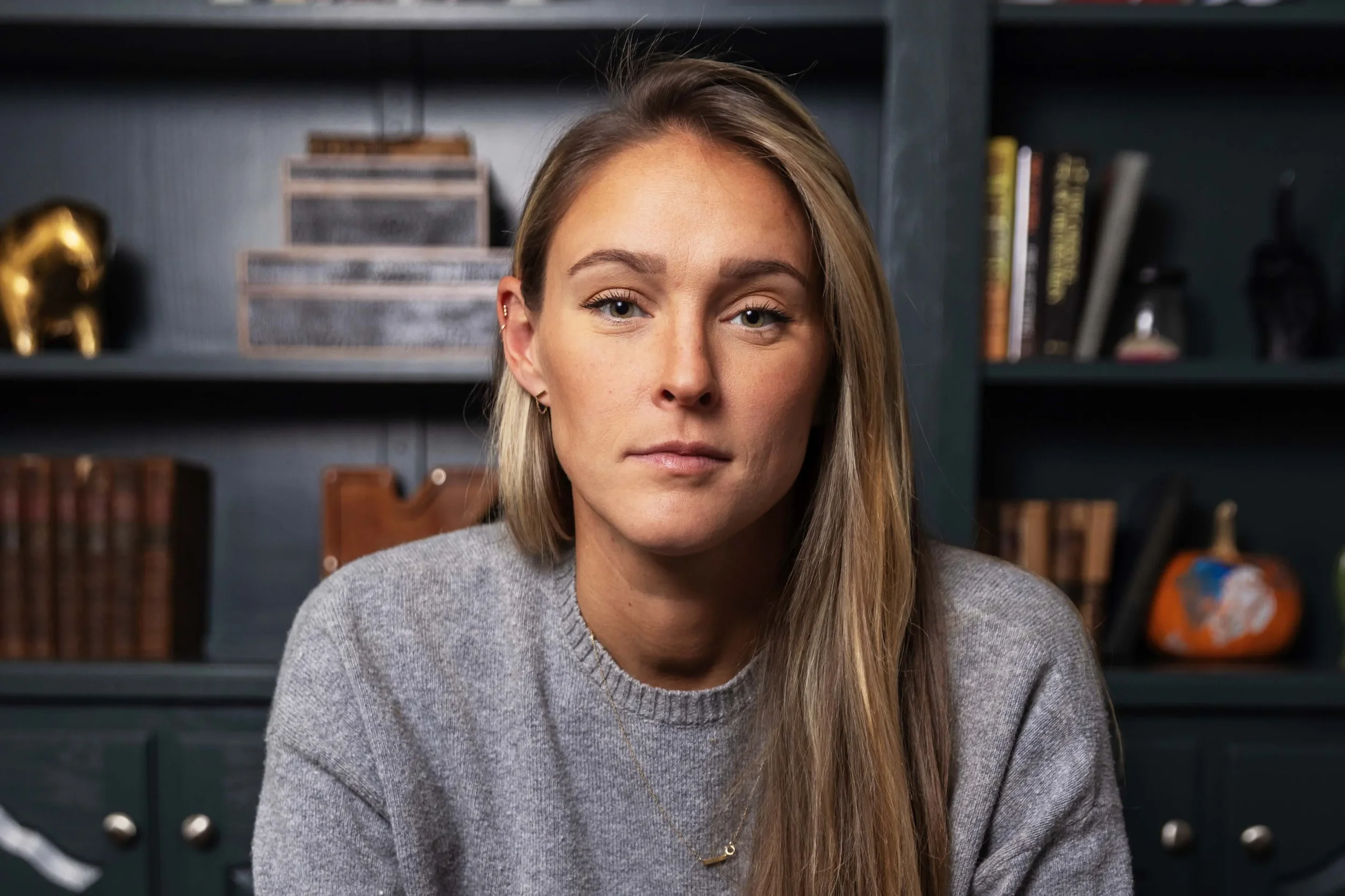
Photo: Kylie Kelce courtesy of Wave.
fertility newsKylie Kelce on Conversations with Cam; Pregnancy Loss, Motherhood, and Finding Grace in the Dark
There are certain things women are expected to handle quietly. Infertility, pregnancy loss and the in-between space where you’re not pregnant, and you’re not exactly okay either. Kylie Kelce went on Conversations with Cam and said “It’s okay to not be okay.” Not in a vague, inspirational quote way. In a very specific, very real way—for women who are trying to conceive, going through IVF, or carrying the kind of loss that doesn’t ever just disappear.
Kylie talked about pregnancy loss in a way that immediately resonated: “It’s a club no one wants to be a part of. But a crazy amount of women are.” And that’s the part that hits. Because statistically, pregnancy loss is common. Research shows that 10–20% of known pregnancies end in miscarriage.
But emotionally it still feels isolating. Like you’re the only one going through it. Like everyone else got the version of pregnancy that works. Until someone says it out loud, and suddenly you realize how many women have been quietly carrying the same story.
Kylie has been open about her own loss—a missed miscarriage in 2018. It happened on her husband’s birthday. Which feels like the kind of detail that explains everything about grief. Because loss doesn’t just exist on its own. It attaches itself to dates, memories, and moments that were supposed to mean something else. And she didn’t sugarcoat what came after. She said it “messed with her brain.” Which, honestly, is one of the most accurate descriptions of pregnancy loss anyone has ever given.
What Kylie talks about—and what a lot of women quietly experience—is what happens after loss. Not just physically. Mentally. The fear. The second-guessing. The Googling. She shared that in pregnancies following her miscarriage, she found herself waiting longer to announce her pregnancy, constantly researching survival statistics, and bracing for something to go wrong. And if you’ve ever been there, you know that it’s not negativity. It’s self-protection.
One of the most powerful things Kylie said is also the simplest: “It never leaves you.” And that’s something many women don’t feel allowed to say. Because often times there’s this unspoken expectation that if you go on to have a healthy pregnancy, if you have children later and if enough time passes you should be “okay.” But grief doesn’t really work like that. It doesn’t just disappear. And hearing someone say that—especially someone in the public eye—feels like permission.
Kylie also pointed out something that almost every woman who has opened up about infertility or loss has experienced: Once you say it out loud… everyone else starts sharing too. She described how people “come out of the woodwork.” Which makes you realize that this isn’t rare. It’s just rarely talked about. There are millions of women walking around carrying some version of this story—just not saying it publicly.
Another part of Kylie’s message that hit home is her stance on privacy. Specifically: stop asking women about pregnancy. Because you never actually know what’s happening behind the scenes. Someone could be in the middle of IVF, recovering from a miscarriage, navigating infertility or deciding whether they even want children.
And a simple “Are you pregnant?” or “When are you having kids?” can land in a way that people don’t intend—but still hurts. Kylie has spoken about the fact that women deserve to share their stories on their own timeline. Or not at all.
One of the most important parts of this conversation is something Kylie continues to advocate for: taking women’s mental health seriously. Because fertility struggles are physical, emotional, psychological and sometimes all-consuming. Research has shown that women experiencing infertility report levels of anxiety and depression comparable to those dealing with major medical conditions. And yet, the support systems don’t always reflect that. Which is why conversations like this matter.
Kylie has also emphasized the role of having a strong support system—both medically and personally. The right doctor having the right conversations and having the right people around you. Because when you’re navigating something as unpredictable as fertility or pregnancy, support is everything.
Watch the Conversation: Kylie Kelce Gets Honest About Fame, Family, & Motherhood
the week at a glance 💌 A new drama series Babies is diving straight into pregnancy loss—the kind of storyline that’s usually whispered about, not shown—and according to star Paapa Essiedu, if it helps even one woman feel less alone or finally say it out loud, then it’s already done its job.
💌 More women are having babies after 35—and while doctors say it comes with a few extra things to watch, it’s not the dramatic, doom-filled situation the internet sometimes makes it out to be.
💌 At 40, Usha Vance is expecting her fourth child. She and Vice President JD Vance are preparing to welcome a baby boy this summer, joining their three young kids—and marking the first time since the 1870s that a sitting VP’s family has had a newborn.
💌 Kansas just overrode a governor’s veto on a bill tied to pregnancy centers—reminding everyone that decisions around pregnancy, care, and choice are still very much being debated at the state level.
💌 Birth rates are dropping fast across the world—and suddenly, something that felt like a personal timeline is now a global conversation.
💌 A new study across 38 countries found that couples who work from home at least one day a week tend to have more children than those who don’t. On average, fertility rates increased by about 0.32 children per woman—which, in demographic terms, is kind of a big deal.
💌 Influencer Bailey McKnight shared her fertility journey—and the moment after moment of negative tests that so many women quietly go through.
💌 Broadcaster Lorraine Kelly is reflecting on her childhood—and how having vibrant parents shaped the way she sees family, life, and motherhood today.
‘Geriatric’ Pregnancy NewsNot a Luxury—A Necessity
After years of being considered an out-of-pocket “extra,” doula support is beginning to move into the mainstream of maternal healthcare.
UnitedHealthcare recently announced expanded coverage options that allow many eligible members to seek reimbursement for doula services during pregnancy, labor, and postpartum care. The change reflects a broader shift toward more comprehensive, patient-centered maternity support—especially for women navigating complex fertility journeys.
For women like Caroline, this kind of support can be significant. After more than a decade of trying to conceive and undergoing in vitro fertilization (IVF), she approached pregnancy with a focus on building a strong care team. Alongside her obstetrician, she chose to work with a doula to help navigate the non-medical aspects of pregnancy and childbirth.
Her labor lasted 27 hours and ultimately resulted in an unplanned cesarean section. Despite the unexpected outcome, Caroline described feeling informed and supported throughout the process—highlighting the role continuous support can play during high-stress medical situations.
A doula is a trained, non-medical professional who provides emotional, physical, and informational support before, during, and after childbirth. Unlike clinical providers, doulas focus on patient experience, helping individuals understand their options and make decisions in real time.
Research has shown that doula care is associated with improved birth outcomes, including lower rates of cesarean delivery and preterm birth, as well as better maternal mental health.
Historically, access to doulas has been limited by cost. By introducing reimbursement options, insurers are beginning to address that gap—making support that was once considered a luxury more accessible to a wider range of patients.
As more women delay motherhood or pursue fertility treatments, demand for expanded support systems during pregnancy is expected to continue growing.
Read more: Doula Support Benefit Now Available to Eligible United Healthcare Members
what we're reaching for🍊 Feeling bloated, off, or just not like your best self? Same. This is one of those tiny daily things that actually makes a difference—just a few drops and you feel like you’re at least trying to have your life together. We use it, our kids use it, and it’s officially part of the routine.
🥂 When we wanted something to take the edge off without alcohol — especially in trimester zero, one, two, three… and let’s be honest, the entire motherhood era. This tincture was the only one that didn’t disappoint.
🤍 A space for women fully in it — IVF, pregnancy after loss, high-anxiety pregnancies, all the fun emotional chaos no one prepares you for. Basically the opposite of someone telling you to “just relax”.
👏 The packing cubes we use when we want to feel even slightly in control of our lives—Everything has a place, you can actually see what you packed, and somehow your entire day feels slightly less chaotic.
👖 Fertility hormones and bloating can make getting dressed feel like a personal betrayal. So here’s our comfort-first guide to what actually feels good during fertility treatments—because if you’re already injecting hormones, the absolute bare minimum is pants that aren’t emotionally aggressive.
🌿 We’ve been using these and the difference it makes with facial and ankle swelling is actually noticeable. It’s a mix of herbal ingredients that support lymphatic drainage and help your body move things along (which we clearly need), and somehow it just works.
From the ‘Geriatric’ Group Chat👯♀️ Hot moms… but make it freelance.
🎨 Because why buy decor when you can commission a crayola masterpiece for free?
🌡️ The Man-Flu, a short film.
🥹 Watch them… or join them.
👀 They said it like she should be worried.
Want to get the latest fertility and pregnancy news sent to your inbox?
*This is a sponsored post.